From Kepler to Ptolemy 11

Prev TOC Next

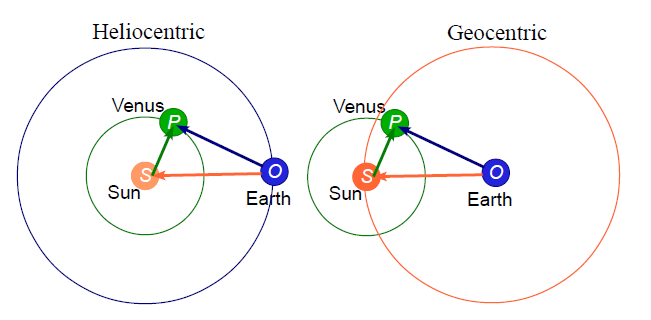
Here is the basic model for Venus:

Continue reading

Leave a comment

Filed under Astronomy, History

First-Order Categorical Logic 12

Prev TOC Next

MW: Last time we looked at the categorical rendition of “C is a model of B”:

  • Functors B:FinSet→BoolAlg and C:FinSet→BoolAlg
  • A natural transformation F:BC

where B and C are hyperdoctrines, and

  • B is syntactic: the elements of each B(n) are equivalence classes of formulas (which we agreed to call predicates);
  • C is semantic: the elements of each C(n) are relations on a domain V.

(We’ve been saying that C(n) is the set of all n-ary relations on V, but I see no need to assume that.)

Continue reading

Leave a comment

Filed under Categories, Conversations, Logic

Set Theory Jottings 5. Zermelo to the Rescue! (Part 1)

Prev TOC Next

Ernst Zermelo is remembered today chiefly for two results. His 1904 paper “Proof that every set can be well-ordered” introduced the Axiom of Choice. His 1908 paper “Investigations in the foundations of set theory” led to the most popular axiomatization of set theory. He thus claims credit for two of the letters of ZFC: Zermelo-Fraenkel with Choice.

Continue reading

5 Comments

Filed under History, Set Theory

From Kepler to Ptolemy 10

Prev TOC Next

We’ve seen the basic plan for an outer planet in post 2:

Continue reading

Leave a comment

Filed under Astronomy, History

First-Order Categorical Logic 11

Prev TOC Next

MW: Last time we justified some equations and inequalities for our adjoints: they preserve some boolean operations, and “half-preserve” some others. And we incidentally made good use of the color palette!

Continue reading

Leave a comment

Filed under Categories, Conversations, Logic

From Kepler to Ptolemy 9

Prev TOC Next

The Moon is the one solar body that does revolve around the Earth. It never displays retrogression. So you’d think Ptolemy wouldn’t “need no stinkin’ epicycles” for it. In fact, Ptolemy gave it a mechanism more complicated than that of any of the planets except Mercury! Here’s the model:

Continue reading

Leave a comment

Filed under Astronomy, History

Set Theory Jottings 4. Ordinals

Prev TOC Next

We saw how Cantor introduced ordinals originally as “symbols”,

0, 1, 2,…; ∞, ∞+1, ∞+2,…; 2∞, 2∞+1,…; 3∞,…; 4∞,…
2, ∞2+1,…; 2∞2,…; 3∞2,…; ∞3,…; ∞4,…
,…; ∞…; ∞

Continue reading

6 Comments

Filed under History, Set Theory

From Kepler to Ptolemy 8

Prev TOC Next

The Sun

Continue reading

Leave a comment

Filed under Astronomy, History

From Kepler to Ptolemy 7

Prev TOC Next

The Full Ptolemy

We now start the second part of this series: an in-depth look at the Ptolemaic system.

Continue reading

Leave a comment

Filed under Astronomy, History

Set Theory Jottings 3. The Paradoxes

Prev TOC Next

Frege added an appendix to volume II of his 1903 magnum opus Grundgesetze der Arithmetik (Foundations of Arithmetic). It began:

A scientist can hardly meet with anything more undesirable than to have the foundations give way just as the work is finished. I was put in this position by a letter from Mr. Bertrand Russell when the work was nearly through the press.

Continue reading

8 Comments

Filed under History, Set Theory