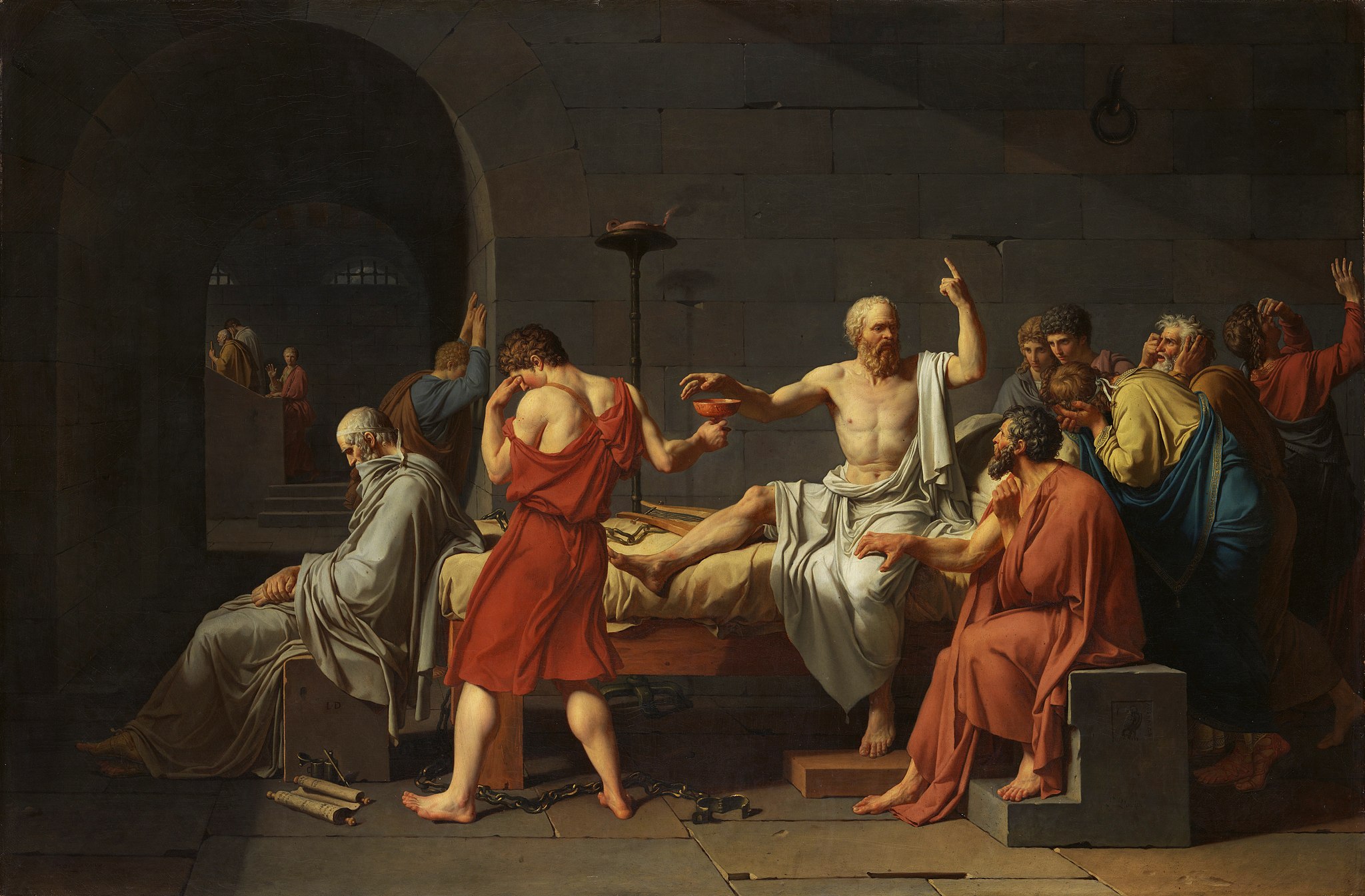
The Death of Socrates, Jacques Louis David.
(From Wikimedia Commons)
Another post from the History Book Club. Continue reading
The Death of Socrates, Jacques Louis David.
(From Wikimedia Commons)
Another post from the History Book Club. Continue reading
Filed under History Book Club, Reviews
Filed under History Book Club, Reviews
Every specialty has its tricks of the trade. They become second nature to practitioners, so they often don’t make it into the textbooks. Quantifiers rule in logic; here are some of the games we can play with them. I’ll start with tricks that apply in logic generally, then turn to those specific to Peano arithmetic.
Filed under Peano Arithmetic

Delacroix’s Liberty Leading the People
Another post from the History Book Club. Continue reading
Filed under History Book Club, Reviews
Substructures and extensions loom large in math: subgroups, subrings, extension fields, submanifolds, subspaces of topological spaces… So too in the model theory of PA.
Filed under Peano Arithmetic
MW: Indicators: we don’t need to discuss these, to prove the Paris-Harrington theorem. But I think they offer valuable insight.
Filed under Conversations, Peano Arithmetic
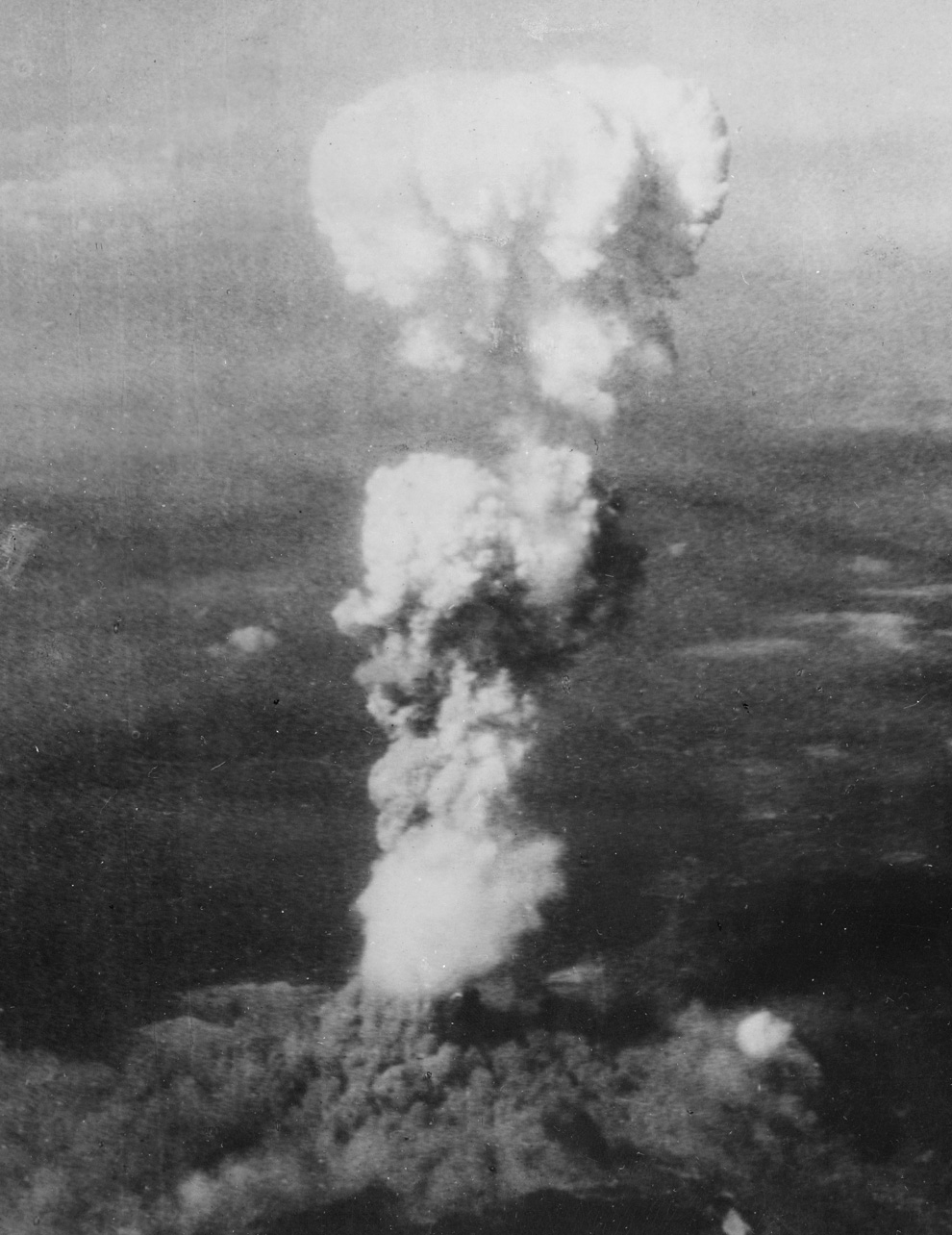 Another post from the History Book Club.
(Why ‘atomic bomb’ rather than ‘nuclear bomb’? See this post.)
Filed under History Book Club, Physics, Reviews

For a few years, I belonged to a history book club. Unlike many book clubs, we didn’t all read the same book. Instead, we’d pick a topic for the next meeting, at which the participants would each give short presentations on books of their choosing.
Recently I ran across my write-ups. As the internet has yet to run out of space, I thought I’d post them. I begin with two on the atomic bomb.
(Why ‘atomic bomb’, rather than ‘nuclear bomb’? See this post.)
Filed under History Book Club, Physics, Reviews
MW: OK! So, we’re trying to show that M, the downward closure of B in N, is a structure for L(PA). In other words, M is closed under successor, plus, and times. I’m going to say, M is a supercut of N. The term cut means an initial segment closed under successor (although some authors use it just to mean initial segment).
Filed under Conversations, Peano Arithmetic
MW: So we have our setup: B⊆M⊆N, with N a model of PA, B a set of “diagonal indiscernibles” (whatever those are) in N, and M the downward closure of B in N. So B is cofinal in M, and M is an initial segment of N. I think we’re not going to go over the proof line by line; instead, we’ll zero in on interesting aspects. Where do you want to start?
Filed under Conversations, Peano Arithmetic
| Reflection groups -… on Set Theory Jottings 5. Zermelo… | |
 | Bhupinder Singh Anan… on Set Theory Jottings 29. D… |
 | Michael Weiss on Set Theory Jottings 29. D… |
| Bhupinder Singh Anan… on Set Theory Jottings 29. D… |
| Michael Weiss on Aristotle and Falling Obj… |